|
|
Birds are to be found in rich profusion, one park, Lochinvar, is believed to contain the widest variety of species in the world.
It has many lakes with beaches for those who wish to swim, sunbathe and enjoy water sports in uncrowded surroundings. It is also criss-crossed by numerous rivers, providing the opportunity for canoeing, rafting or fishing in unspoilt wilderness areas.
|
![]() |
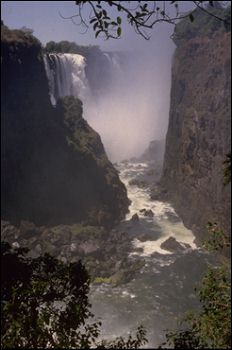
What could compare, in terms of awe-inspiring majesty, with the Victoria Falls, known locally as Mosi-oa-Tunya, the Smoke that Thunders? The mighty Zambezi runs through the country, its name alone evoking images of the spirit of Africa. Tourism is playing an ever greater role in the Zambian economy and top priority is being put on ensuring the transport and accommodation infrastructure meets the demands of the international traveller.
|
Yet despite its growing popularity amongst discerning travellers, Zambia has resisted the temptation to appeal the mass market. So while the services offered in the lodges and camps is of top quality, everything is on a small, highly-personalised scale. |
![]() The warmth of the welcome of the Zambian people is also legendary and their ceremonies and festivals provide and added dimension to an unforgettable holiday. |
ZAMBIA THE FACTSHISTORYThe first humans to inhabit Zambia were the San or Bushmen. Their ancient rock-art is still being discovered in various parts of Zambia.The Bushmen gave way to the invading Bantu from the north. Tribal wars and the slave trade caused upheavals until the missionaries arrived, including Dr. David Livingstone. Cecil Rhodes followed in his wake, and in 1911, the country became the British colony of Northern Rhodesia, with Livingstone as the capital. The colonial regime was replaced, in |
1953, by the Federation of Rhodesia and Nyasaland [now Zambia, Zimbabwe and Malawi], but the grouping collapsed after 10 years, paving the way for Zambian independence under Dr Kenneth Kaunda. It became an independent republic within the Commonwealth in October 1964. In 1972 it was declared a one-party state, but reverted back to multi-party politics in December 1990. The current Zambian government is committed to re-building the country's tourism industry after decades of neglect.
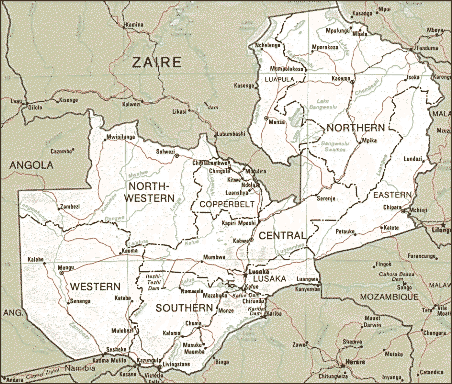
GEOGRAPHYWhen visitors travel around Zambia one thing that strikes them is the country's sheer size. It covers some 750,000 sq. km. - big enough to swallow up France, |
Austria, Switzerland and Hungary combined. It lies in the tropical belt of south-central Africa.
Situated on a plateau 1,300 metres above sea level, Zambia is the source of two great African river, the Zaire and the Zambezi, the latter running through two of the country's outstanding features, the magnificent Victoria Falls and the vast man-made "inland sea" Lake Kariba. As well as the Falls, Zambia possesses two of the largest wildlife sanctuaries in Africa, the Luangwa and the Kafue National Parks. Altogether there are 19 National Parks, covering eight percent of the country. The capital is Lusaka, but the town of Livingstone, near Victoria Falls, is a key tourist centre. |
CLIMATEZambia's elevation on a plateau gives it a moderate climate, despite the fact it is within tropical latitudes. Indeed the weather is so pleasant Zambia has been nicknamed "the air-conditioned state". There are three seasons: warm and wet from December to April; cool and dry from May to August; and hot and dry from September to November. Only during the wet season is there noticeable humidity and only in the river valleys of the Zambezi and Luangwa is it very hot, and then only in the month of October. |
SPECIAL INTEREST HOLIDAYSBirdwatchers, anglers and train buffs will find Zambia a particularly rewarding place to visit. For the ornithologist the country is a paradise, it probably offers the finest birdwatching opportunities in Africa. Lochinvar National Park alone shelters 428 different species in its comparatively small 410 sq. km.: its claim to hold the world |
record for the diversity of types has not been challenged. It features a host of different waders, ducks and waterfowl and also some interesting woodland species. But while all the National Parks are rich in bird life, Kasanka is of particular interest as it attracts species not generally seen in southern Africa.
For those whose passion is fishing, Zambia will not fail to delight. The past time can be enjoyed throughout the year, |
but the best period for fishing is between April and November.
Kasaba Bay, on the Zambian section of Lake Tanganyika, hosts the Zambian National fishing Competition. Nile perch and tiger fish are the main catches. The Zambezi River is probably the best place for the challenging tiger fish, although its fighting qualities can also be experienced at the Kasanka National Park, where the tasty small-mouth bream and the |
"vundu" catfish can also be caught.
Train buffs can view historic steam trains and rolling stock at the Steam Railway Museum located at the former Zambezi Sawmills Railway Locomotive sheds near Victoria Falls. Unique exhibits include a 7th class team locomotive, dating back to 1892 - one of the first to operate in Zambia. |
![]()
|
|
|
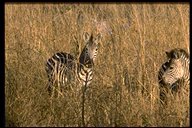
Vast areas of unspoiled and virtually undiscovered protected wilderness areas make Zambia an undisputed favorite amongst dedicated safari fans Covering 22,500 sq. km. - the size of Wales - Kafue is one of the world's largest National Parks. The Kafue River and its tributaries contribute to the great diversity of landscapes making this one of the most interesting and rewarding African parks. Elephant, buffalo, leopard, lion and a large range of antelope can be seen here, as can 400 species of birds. Much of the park consists of woodland, which opens out at intervals into wide grassy areas known as "dambos", grazed by sable, hartebeest, wildebeest, buffalo and zebra. The northern section of the park is dominated by a vast, rolling floodplain fed by the Lufupa river system, which recedes in the dry season, stranding large herds of hippo in shallow pools. This is one of Kafue's richest wildlife areas attracting a diverse range of antelope including the red lechwe and, living deep in the swamps, the sitatunga, its wide-splayed hooves enabling it to walk on floating mats of reeds. This profusion of game attracts the big cats, notably cheetah and lion although the elusive leopard is also sighted regularly. Birdlife is also rich in variety. The lush strip of riverine vegetation on the banks of the Kafue River, is home to crocodile, water monitor lizards, hippo and bushbuck.
In contrast to Kafue, Kasanka is one of the country's smallest, yet most attractive National Parks. Since 1990 it has been privately managed, with profits from tourism channeled back into the community. It lies on the fringe of the vast wetlands of Lake Bangweulu and within its 420 sq. km. are no less than eight lakes and four rivers, the largest being the Luwombwa, which offers excellent opportunities for anglers. Kasanka's wetlands also include tracts of papyrus swamp - a retreat for sitatunga antelope. The rare shoebill stork, which, with its bulbous bill has the appearance of the dodo, has also been spotted here. Other interesting habitats include small pockets of swamp forest. During the rains more than one million fruit bats come here to roost. The park also supports elephant, hippo, a range of other antelope species, as well as warthog, bushpig, baboon, vervet monkey, civet, jackal, hyena and leopard. The rare blue monkey can be found in the forests. Kasanka is of particular interest to birdwatchers since it attracts a number of unusual species not usually found in the Southern Africa region.
|
floodplain, graceful, water-loving lechwe antelope graze in their thousands. There are more than 30,000 of these animals in Lochinvar, which move seasonally according to the flood level. The central grassland, typified by scattered termite mounds and grassy plains, is grazed by buffalo, zebra, wildebeest and oribi. The so-called "candelabra" tree is a feature here. The woodlands of the south are inhabited by kudu, bushbuck, baboon, vervet monkey and bushpig. There are also some hot springs surrounded by lush vegetation. Despite its comparatively small size -covering just 410 sq. km. -Lochinvar is one of Africa's finest bird sanctuaries sheltering an estimated 428 species, including a number of rarities.
This, the most recent of Zambia's National Parks, was for many years a forgotten wildemess. But now the 4,092 sq. km. of superb game country welcomes visitors from around the world. It lies along the northern bank of the Zambezi River some 400 km, downstream of Victoria Falls. The sparkling waters of the Zambezi are a focal point for the abundant wildlife which includes elephant, hippo, buffalo, zebra, lion, cheetah, leopard, various antelope species, baboon and vervet monkey, together with a great variety of birds. Canoe safaris have become a popular way of exploring the Lower Zambezi, enabling visitors to get close to the wildlife in its natural habitat, although a look-out needs to be kept for the large crocodiles which live in its waters. This park has been created to protect both wildlife and one of the greatest natural wonders of the world, the Victoria Falls. "Mosi-oa-Tunya" is the name given by the local people to the Falls, a graphical description meaning "the smoke that thunders." The crashing waters not only create a deafening noise, but also clouds of vapor that can be seen up to 30 km. away. Rainbows are created, most spectacularly at night, when moonlight is caught in the spray. A few kilometers upstream of the Falls is the Zoological Park which runs along a strip of riverine forest. The park is best known for its giraffe but it also contains buffalo, zebra, sable, eland, wildebeest, Kafue lechwe, impala warthog, baboon and vervet monkey. Elephant migrate to the Zambian side from Zimbabwe in the height of the season - from August to September - in search of food. This park is less well-known than its southern counterpart, but nevertheless is one of Africa's most spectacular wilderness areas. Remote, and 4,636 sq. km., it offers a unique experience for those seeking a true, off-the-beaten-track experience. Walking safaris, which allow visitors to get really to the natural world, are a specialty. The park lies on the western side of the mighty Luangwa River, upstream of the South Luangwa National Park, and separated by a narrow corridor. The |
western boundary is marked by the Muchinga Escarpment, which soars 1,100 meters above sea level. The jewel of the park is the Mwaleshi River, which runs down the escarpment in a series of waterfalls. North Luangwa is primarily a woodland park. It is particularly noted for its huge herds of buffalo, which make a great spectacle as they congregate at the river to drink, sometimes hunted by lion. Other common mammals include elephant, leopard, wildcat, hyena, wildebeest, bushbuck, kudu, puku, impala, zebra, warthog, baboon and vervet monkey. There are also a number of animals which are unlikely to be seen in the South Park, such as oribi, hartebeest, reedbuck and eland - the largest antelope.
This park, to the far north of Zambia, boasts 80 km. of the shoreline of Lake Tanganyika, which ranges from sandy beaches to vertical cliffs and rocky coves. In all the park covers an area of 2,020 sq. km. extending southwards across rugged, hilly country with deep valleys rich in wildlife. During the dry season herds of elephant head for the lakeshore. Bushbuck, warthog and puku are among the other animals which frequent the shore while the lake itself contains some of the most prized sports fish. Nsumbu has a diverse range of wildlife. The magnificent roan, sable and eland antelope are found here as well as hartebeest, buffalo and zebra. The park is good lion country and leopards are common. The rare blue duiker and the sitatunga, may also be seen. Flamingo visit the lake during their migrations. This park is widely acknowledged as offering some of the best game viewing opportunities in Africa. It covers a vast area of 9,050 sq. km. bordered by the Muchinga escarpment to the west and by the mighty Luangwa River to the east. The Luangwa Valley forms part of the Great Rift Valley which cuts a vast channel down the backbone of Africa. The scenery is dramatic, the Valley floor nestles some 800 m. below the surrounding plateau with the Luangwa River carving its tortuous course through the center. The Luangwa and, its tributaries are the lifeblood of the region. These waters account for the great profusion of wildlife, which can dry be seen either on guided walks or in open vehicles.
|
For those seeking activity holidays Zambia is simply brimming with opportunities. There are several safari options as well as a range of sporting and other recreational pursuits to be enjoyed. Walking safaris: Zambia is the birthplace of the walking safari and there's no better way of getting really close to nature than this. Under the watchful eye of armed rangers, walkers are able to enjoy the sights, sounds - and silence - of the bush in complete harmony with their surroundings. On some treks participants may be exploring areas untouched by man for many centuries. Game viewing drives: Daily-game viewing drives in open vehicles are operated at dawn and dusk by experienced armed rangers and trackers who possess a canny "sixth sense" of where to seek out the most interesting |
wildlife. Night drives are also arranged enabling visitors to glimpse the nocturnal world. Canoe safaris: These offer a great alternative to land-based safaris and no real boating skills or experience are necessary. Two-seater, fibre-glass canoes ply the waters of the Zambezi, providing both an excellent vantage point and a silent way of viewing the animals, so not disturbing them. Canoes are also operated in the scenic network of rivers in the Kasanka National Park.
White water rafting: The swirling rapids of the Zambezi below the Victoria Falls offer some of the most exciting and challenging rafting waters in the world. Regular safaris operate between August/September and November, starting at the Boiling Pot below the Falls and winding through spectacular gorges and through 10 major rapids. Golf: The championship Lusaka Golf Course is on the circuit of the annual PGA safari tour, which |
also includes Zimbabwe and Kenya. Two other good courses are located in the Lusaka area. Bookings can be made through the visitors' hotels. There are also courses near Livingstone, Kasaba Bay, Mufulira, Kitwe, Chingola and Ndola. Boating and watersports: Zambia's lakes -in particular Lake Tanganyika and Lake Kariba -provide opportunities for boating, sailing and other watersports such as water-skiing and windsurfing.
Bungee jumping: The bridge at Victoria Falls offers some of the highest and most spectacular bungee jumps on the planet. Not for the fainthearted! Micro-lighting: Views of the Falls and of the surrounding wilderness areas can be enjoyed from a micro-light aircraft. |
|
Kapani Safari Lodge, situated on an ox bow lagoon of the Luangwa River in the South Luangwa National Park, is probably Zambia's most exclusive safari destination. Norman Carr, the founding father of Zambian Safaris, has personally trained the guides who escort guests into the park, either in vehicles or on foot. Guests are also given the chance to experience the thrill of night drives when the big cats can be seen in action. The lodge has eight double chalets, each with en-suite facilities, fan and bar fridge while a secluded swimming pool offers refuge from the heat of the day. But for the ultimate safari experience Kapani operates two bush camps, in remote areas of the park, where a maximum of six guests can hear the lions roar at night and search for them on foot by day. Kapani Lodge, and the rest of the Luangwa Valley, is served by Safarilink, the scheduled charter service which connects the Valley with both Victoria Falls and Botswana's Chobe National Park so for further information contact: Kapani Safari Lodge PO Box 100 Mfuwe, Zambia Tel: 00-260 62 45015 Fax: 00-260 62 45025 Telex: 63008 ZA |
|
A wide diversity of tribal nations make up Zambia's population, and while friendliness and helpfulness towards visitors are universal traits, varying traditions provide a rich cultural tapestry to fascinate the tourist. In particular there are a number of dances and ceremonies to be seen which reflect this multi-faceted heritage.
THE KUOMBOKA
LIKUMBI LYA MIZE
UMUTOMBOKO
SHIMUNENGA
THE N'CWALA
|
|
ROBIN POPE There's no better way to discover the wilderness secrets of the South Luangwa National Park than with the leading guide in the country, Robin Pope, who has more than 20 years' experience of showing visitors the 'Real Africa'. He and his wife Jo operate four small and highly personalized operations, the latest of which is Zebra Pans, a six-bed bush camp in the center of the park. The walking safaris from this remote and rustic camp are combined with stays at Tena Tena and Nkwali Camps. Robin's first camp, the now famous Tena Tena, is situated on the banks of the Luangwa River in another remote area of the park. The six tents each have en-suite bathrooms. According to the Times" Tena Tena is altogether beyond superlatives and must be one of the best safari camps in Africa." Nkwali camp, overlooking the National Park across the Luangwa River, consists of six chalets with en suite bathrooms Wildlife is prolific and both camps offer walks and day and night drives in open vehicles. Robin's five-day Walking Safari is regarded as the top wildemess safari in Zambia. The mobile camp has everything, including a fridge to keep the beers cold. The Walking Safari "gives you wildemess in vast doses, without the feeling of austerity, " writes Simon Bames of The Times Safaris to Kasanka and Bangweulu Plateau and Liuwa Plains are Swamps, Nyika also a specialty. For further information contact Robin Pope Safaris, PO Box 320154, Lusaka, Zambia. Fax: +260 62 45051/45076. Telex: ZA63007. |
WILDS TO TOWN Lilayi Lodge & Game Ranch, which is only 15 km from the center of Lusaka, transports you from concrete city to a very different environment in as many minutes. The grass-roofed chalets or 'rondavels' some double, some single with sitting room, are beautifully furnished right down to the paintings on the walls and individually carved front doors. The main thatched lodge has a spacious bar and dining room and a modern kitchen producing excellent cuisine. It faces a large swimming pool that, thanks to Zambia's moderate climate, may be used day and night. At night you can even watch gracious waterbuck going town to drink at a nearby, floodlit waterhole. There are no dangerous animals on the ranch so you can walk, alone or accompanied by game scouts, ride on horseback or drive around 600 hectares of silent, untouched woodland, home to 16 species of antelope, 280 species of birds and 17 species of other mammals. Lilayi Lodge is a residential hotel suitable for weekend or longer stays. Conventions, seminars and board meetings can be booked. Lilayi Lodge, PO Box 30093, Lusaka, Zambia. Tel: 00-260 1 228682/3. Fax: 00-260 1 222906. |
Copyright © 1996, Hans Hillewaert, Last Updated - 14 April 1996